Architecture that Lasts
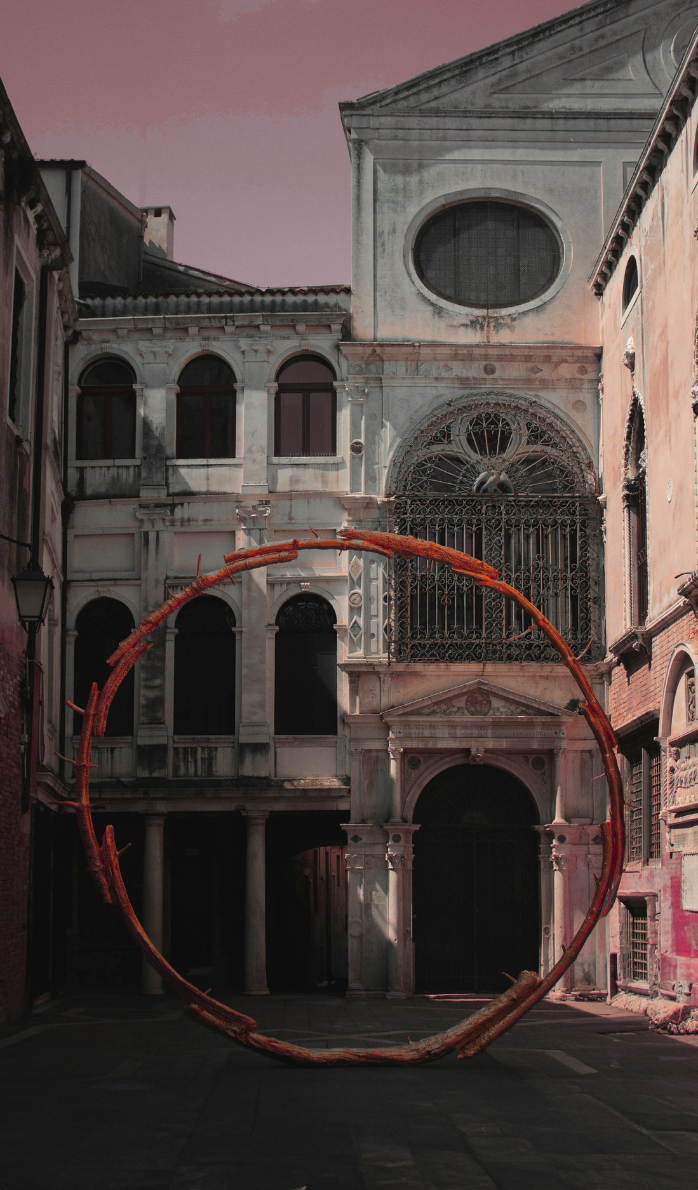 Photo by Jens Riesenberg
1–3 PM Eastern Time · Live Online
Architecture That Lasts examines the gap between why professionals entered this field and what it produces today, through peer-reviewed research from neuroscience, environmental psychology, health sciences, and sustainability studies. It reveals why ordered, legible, materially honest, and time-tested environments align so consistently with human biology, cognitive function, emotional regulation, and long-term environmental responsibility. Across standalone but cumulative sessions, one pattern emerges: environments that endure do so for a reason. They align with how human biology responds to order, proportion, and pattern.
“Architecture designed according to timeless principles is healthier for people, places, and the planet.”
Four sessions. One deep dive into how human biology responds to order, proportion, and pattern.
Each session stands alone. 2 HSW CEUs each, 8 for the full series. Access the recording if you miss the live session.
01
Wed. Sep 2, 20261–3 PM ET · Live
From the Savannah to the City: The Evolutionary Roots of Architectural Perception
2 HSW CEUs | AIA # DAS506 | IDCEC # 126699
Register
From the Savannah to the City: The Evolutionary Roots of Architectural Perception
This course establishes the biological foundation of architecture that lasts by grounding the experience in human evolution. Drawing from neuroscience, it examines how the human brain developed mechanisms to detect structure, depth, contrast, and spatial hierarchy in complex environments, mechanisms that remain active in our experience of architecture today.
By understanding how the brain evolved to “read” space, participants gain a scientific framework for evaluating architecture beyond taste or ideology. This biological grounding provides the foundation for later sessions, which examine visual discomfort, legibility, sensory richness, durability, and the long-term endurance of certain architectural principles.
- Explain how human evolution shaped the way people perceive spatial cues such as prospect, refuge, depth, shelter, pattern, and environmental legibility to support human health.
- Describe how the Savannah Hypothesis and the Prospect–Refuge Theory help architects understand how specific spatial conditions enhance occupant safety.
- Identify how neuroaesthetics connects architectural experience to perception, emotion, valuation, memory, and meaning, ultimately impacting human welfare.
- Analyze how beauty, pattern recognition, and bottom-up/top-down perception influence the body’s response to architectural environments and promote emotional well-being.
02
Wed. Oct 7, 20261–3 PM ET · Live
Proportion, Hierarchy, and the Body: How to Build for Humans
2 HSW CEUs | AIA # DAS507 | IDCEC # 126906
Register
Proportion, Hierarchy, and the Body: How to Build for Humans
In this course you will explore how the human body perceives proportion, scale, rhythm, symmetry, hierarchy, and spatial order, and how these principles can inform healthier, safer, and more legible buildings. Drawing from Vitruvius, classical design theory, embodied cognition, affordance research, and neuroarchitecture, the session examines how bodies judge dimensions, movement, entrances, centers, and relationships between parts and whole.
You will learn to use proportional systems, architectural hierarchy, rhythmic organization, and perceptual correction without copying a historical style. Upon completion, you will be able to evaluate whether a design supports bodily fit, orientation, visual coherence, and perceptual ease, and apply these principles to contemporary plans, façades, interiors, and public spaces.
- Analyze how body-scaled perception, affordances, and human variation influence physical comfort, accessibility, and occupant health.
- Evaluate how hierarchy and center communicate architectural importance, organize attention, and support perceptual clarity and psychological well-being.
- Apply proportion, rhythm, symmetry, and ordered variation to create perceptually coherent environments that support cognitive ease and psychological well-being.
- Design contemporary architectural compositions using proportional modules, part-to-whole relationships, and perceptual adjustments without relying on historical imitation.
03
Wed. Nov 4, 20261–3 PM ET · Live
Visual Discomfort and the Myth of Neutral Design
2 HSW CEUs | AIA # DAS508
Register
Visual Discomfort and the Myth of Neutral Design
We tend to treat plain, minimal design as a safe default, but a blank, sterile space is never truly neutral. It still acts on us, and an environment stripped of sensory information can leave people feeling uneasy or strangely drained. “Neutral” also tends to carry quiet assumptions, that efficiency, abstraction, and easy replacement are virtues in themselves. This session looks at what minimalism actually does to the people who live in it.
- Explain why minimal, “neutral” environments are not visually neutral, and how sterility and unstated design priorities affect occupant comfort and well-being.
- Analyze how contrast, repetition, and certain repeating patterns cause façades and interiors to depart from the visual qualities of natural scenes and provoke measurable visual stress.
- Distinguish visual noise from healthy visual complexity, and evaluate how each affects mental effort, comfort, and occupant health.
- Apply these principles to contemporary elevations, detailing, and interior surfaces to reduce visual discomfort and support visual ease.
04
Wed. Dec 2, 20261–3 PM ET · Live
True Sustainability: Vernacular Intelligence and the Architecture of Longevity
2 HSW CEUs | AIA # DAS509
Register
True Sustainability: Vernacular Intelligence and the Architecture of Longevity
This session examines sustainability not as a technological add-on, but as an architectural intelligence embedded in traditional and vernacular building systems long before the term “sustainability” existed. The first half explores how vernacular architecture evolved as a climate-responsive, materially efficient, and regionally adaptive form of environmental design. The second half reframes sustainability through the lens of longevity. Instead of focusing solely on operational performance or energy metrics, the discussion turns to lifecycle durability, embodied energy, demolition culture, and the civilizational implications of disposable architecture.
Together, these two lenses argue that true sustainability is not primarily about innovation, but about continuity: the continuity of material logic, climatic adaptation, and cultural endurance. Participants will leave with a framework for evaluating sustainability beyond certification systems and toward architectural decisions that support both ecological and civilizational resilience.
- Analyze how vernacular building traditions function as climate-responsive, materially efficient environmental adaptation that supports occupant health and comfort.
- Evaluate how embodied energy, lifecycle carbon, and demolition culture affect the environmental and public-health burden of the built environment.
- Apply material durability, repairability, and adaptive-reuse strategies to extend building lifespan and reduce environmental harm.
- Assess how cultural continuity and psychological attachment to enduring buildings support human well-being and long-term civilizational resilience.
Continuing education that respects your time and informs your practice.


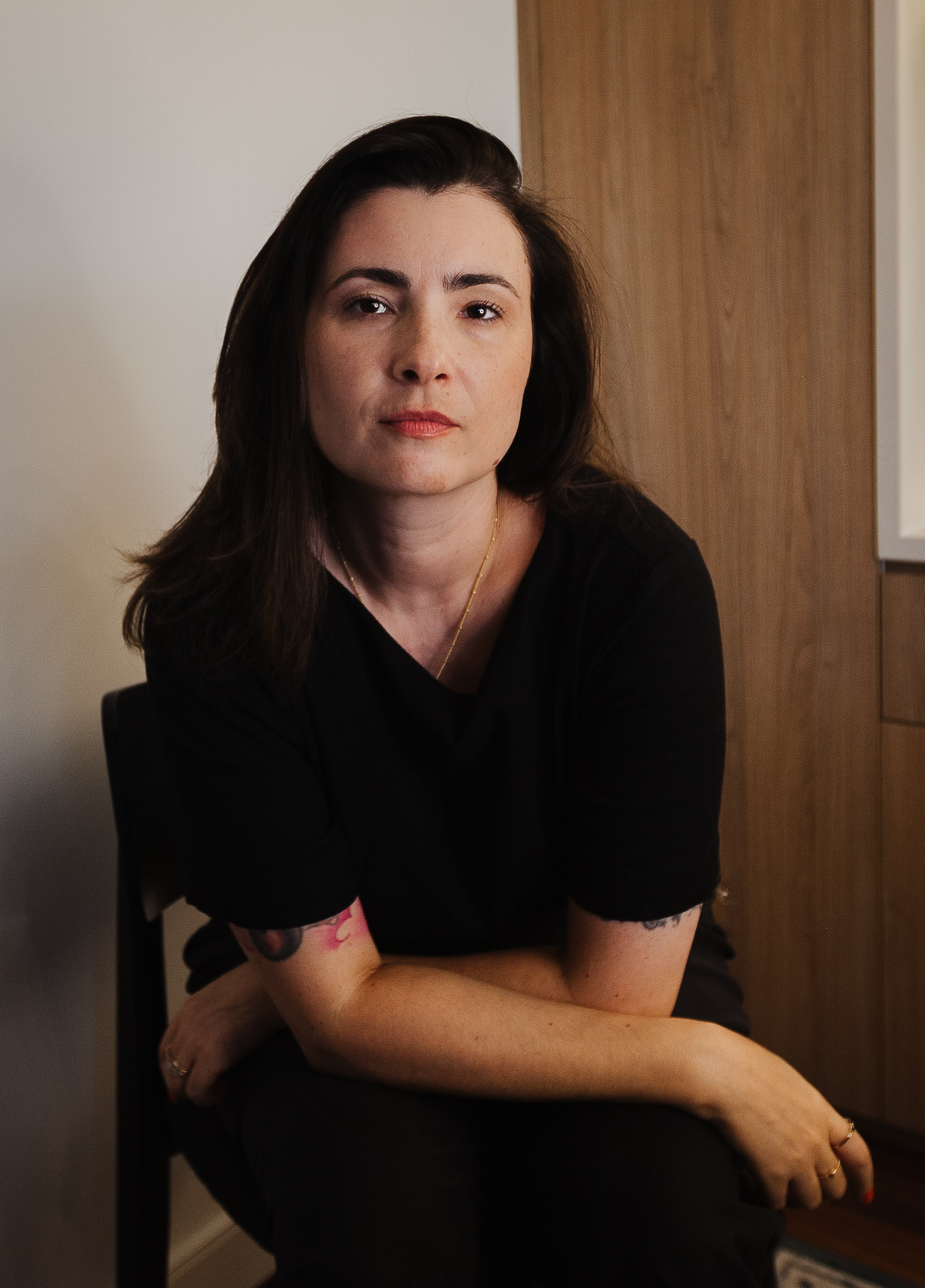
Natalie Jorge is a Brazilian architect whose work draws from neuroscience, psychology, and environmental ethics, and explores how architecture influences human behavior, mental health, and social well-being. She integrates classical design principles to promote balance, beauty, and a sense of belonging in the built environment.
She doesn't just teach human-centered design. She practices it.
- Master of Architecture, University of Colorado Denver
- Certificate in Classical Architecture, Institute of Classical Architecture & Art (ICAA)
- Professional practice in the United States and Brazil
For practitioners who want to know why.
Beyond compliance
You need the HSW credits, but you'd rather earn them learning something that changes how you work.
A reliable lens
You want to evaluate design by how bodies and brains actually respond, not by taste, trend, or ideology.
Built to last
You care about environments that still feel right decades on, not just ones that photograph well at handover.
A biological case for what endures.
Read space the way the body does
The evolutionary and perceptual mechanisms that make some environments legible and calming, and others stressful.
Evidence you can use
Language and research to defend design decisions to clients, reviewers, and peers.
Immediately useful, durably relevant
Principles that apply to today's project and hold up across the whole arc of your practice.
Two ways to begin.
Register for the live series, or start with a single session.
- All 4 live sessions, plus recordings
- 8 AIA- and IDCEC-approved HSW CEUs
- Cancel any time, full refund, no questions asked
- One live session, plus its recording
- 2 AIA- and IDCEC-approved HSW CEUs
- Upgrade to the full series anytime
- Cancel any time, full refund, no questions asked
Frequently asked
Loading…
“We need to start reading space like the body does.”